
Arches
National Park
Utah
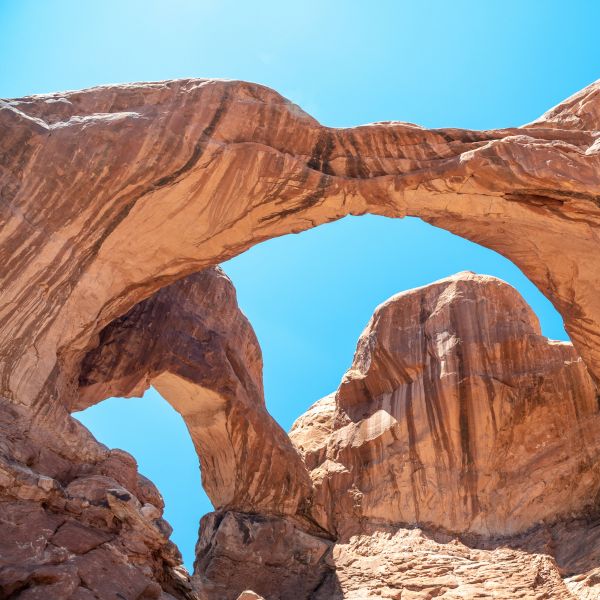
a desert landscape adorned with over 2,000 natural stone arches and contrasting red rock formations
Fast Facts
Location
southeastern Utah
Established in
1975
Established by
President Richard Nixon
Size
120 sq. miles

Known For
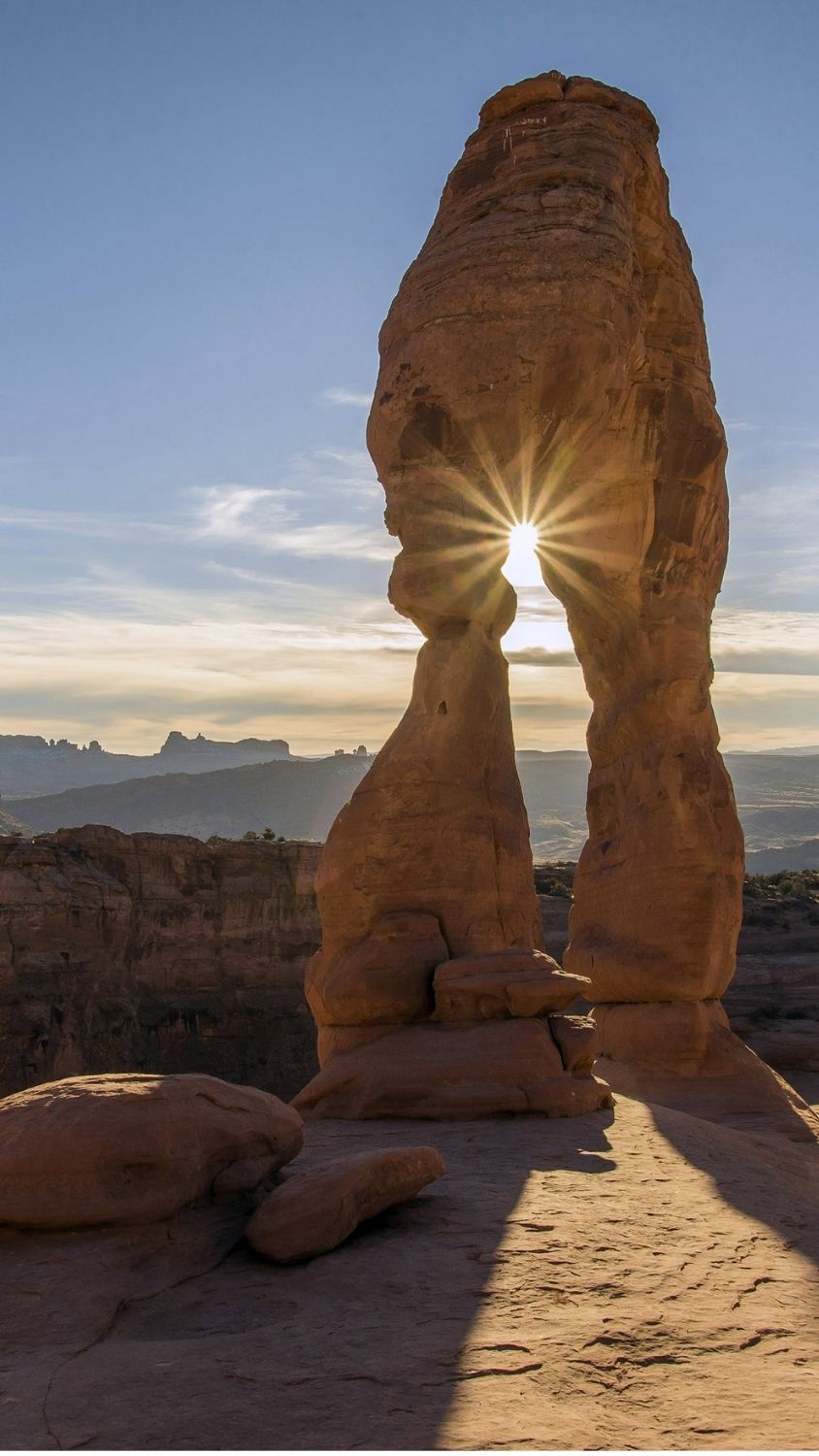
- Home to over 2,000 natural sandstone arches, including the iconic Delicate Arch and Landscape Arch
- Red rock landscapes and unique geological features, showcasing the region’s vibrant and varied colors
- Panoramic views of the Colorado River, canyons, and expansive desert landscapes
History
Natural History and Formation
The geological history of Arches National Park is a fascinating story that spans millions of years and involves a combination of sedimentation, erosion, and the uplifting of the Colorado Plateau.
Sedimentation: The story begins around 300 million years ago during the Permian Period when the region that is now Arches National Park was covered by a vast inland sea. Over time, layers of sediment, including sand and salt, accumulated on the sea floor.
Formation of Entrada and Navajo Sandstone: Around 150 million years ago, during the Jurassic Period, the sea retreated, and the region became a vast desert. The accumulated sediment from the sea was eventually compacted and cemented, forming the Entrada and Navajo sandstone layers that are prevalent in the park.
Uplift of the Colorado Plateau: Subsequent tectonic activity, including the uplifting of the Colorado Plateau, began around 60 million years ago. This uplift exposed the layered rock formations to the forces of erosion.
Erosion by Water and Ice: The primary forces of erosion that shaped the landscape were water, in the form of rivers and occasional flash floods, and ice during periods of glaciation. The Colorado River, which flows to the south of the park, played a crucial role in carving deep canyons.
Formation of Arches: The most distinctive feature of the park, the natural stone arches, resulted from the selective erosion of softer rock layers within the Entrada and Navajo sandstone. Over time, weathering and erosion created fins, spires, and eventually, arches. Frost action, the expansion and contraction of ice, played a significant role in sculpting these features.
Ongoing Geological Processes: The geological processes in the park are ongoing, with continued erosion shaping and altering the landscape. Arches are not permanent structures; they eventually collapse due to natural forces.
Arches National Park provides a stunning showcase of the geological forces that have shaped and continue to shape the Colorado Plateau, offering a unique and visually captivating landscape for visitors to explore.
Native History
Preservation
Future Preservation
Preserving Arches National Park for the future poses several challenges, as the park faces a delicate balance between visitor enjoyment, conservation of natural and cultural resources, and the impacts of a changing environment.
Visitor Impact: The popularity of Arches National Park has led to increased visitation, resulting in challenges such as soil erosion, trampling of vegetation, and wear on popular trails. Managing and mitigating these impacts while providing a positive visitor experience is an ongoing challenge.
Infrastructure and Accessibility: Balancing the need for infrastructure, such as roads, parking facilities, and visitor centers, with the preservation of the park’s natural beauty is a complex challenge. Ensuring access for visitors while minimizing the impact on the environment requires thoughtful planning and design.
Climate Change: The impacts of climate change, including rising temperatures, altered precipitation patterns, and increased frequency of extreme weather events, can affect the park’s ecosystems and geological features. Adapting to these changes and implementing strategies to mitigate their effects is a critical challenge for long-term preservation.
Light Pollution: Despite being recognized as an International Dark Sky Park, light pollution from surrounding areas can still affect the park’s pristine night skies. Managing and mitigating light pollution, both within and outside the park boundaries, is important for preserving the natural darkness that enhances the stargazing experience.
Cultural Resource Protection: Safeguarding archaeological sites, petroglyphs, and other cultural resources from vandalism, theft, and inadvertent damage is an ongoing challenge. Balancing public access with the need to protect these sensitive areas requires effective monitoring and educational efforts.
Invasive Species: The introduction and spread of invasive plant species can threaten the park’s native flora and disrupt ecosystems. Controlling and preventing the spread of invasive species is essential for maintaining the park’s biodiversity.
Resource Management: Balancing the preservation of natural landscapes with the need for fire management, invasive species control, and other resource management practices is a challenge. Striking the right balance between natural processes and active management to preserve ecological integrity is crucial.
Limited Resources: Like many national parks, Arches faces challenges associated with limited financial and personnel resources. Adequate funding is essential for implementing conservation initiatives, maintaining infrastructure, and addressing emerging issues.
Addressing these challenges requires collaboration among park management, government agencies, local communities, and visitors. Through thoughtful planning, responsible visitor education, and adaptive management strategies, Arches National Park can continue to thrive and be enjoyed by future generations while preserving its unique natural and cultural heritage.
Geography
Arches National Park, located in southeastern Utah, is a mesmerizing testament to the erosive power of wind and water over millions of years. Its iconic landscape is dominated by over 2,000 natural sandstone arches, the largest concentration in the world, alongside towering pinnacles, fins, and balanced rocks sculpted by geological forces. The park’s geography showcases a dynamic interplay of sedimentary rock layers, revealing a chronicle of Earth’s geological history dating back millions of years.
Natural Stone Arches
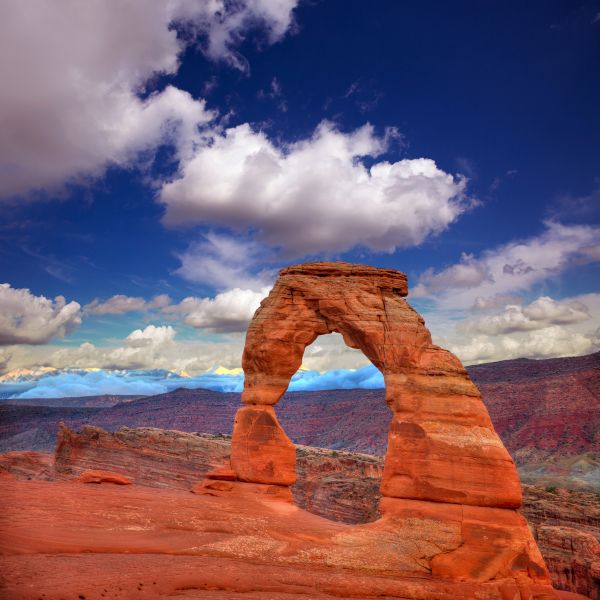
Arches National Park is famous for its natural stone arches, with over 2,000 documented arches within its boundaries. These arches are the result of erosion that has sculpted the Entrada and Navajo sandstone into various shapes over millions of years.
Colorado Plateau
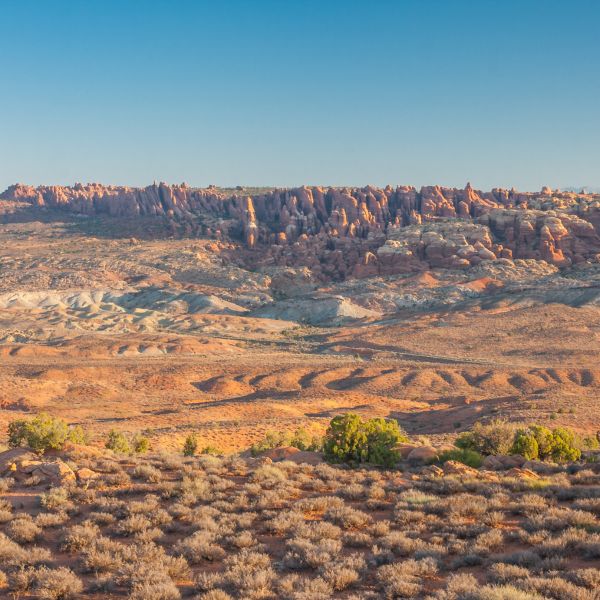
The park is situated on the Colorado Plateau, a vast uplifted region known for its dramatic landscapes and diverse geological formations. This plateau extends across parts of Utah, Colorado, New Mexico, and Arizona.
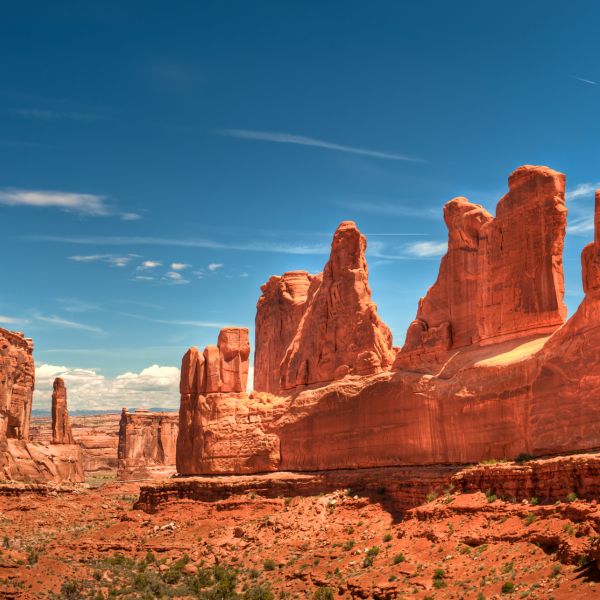
Rock Formations
The dominant rock formations in the park are the Entrada and Navajo sandstone layers. These sedimentary rocks give rise to the iconic features such as arches, fins, spires, and balanced rocks that characterize the landscape.
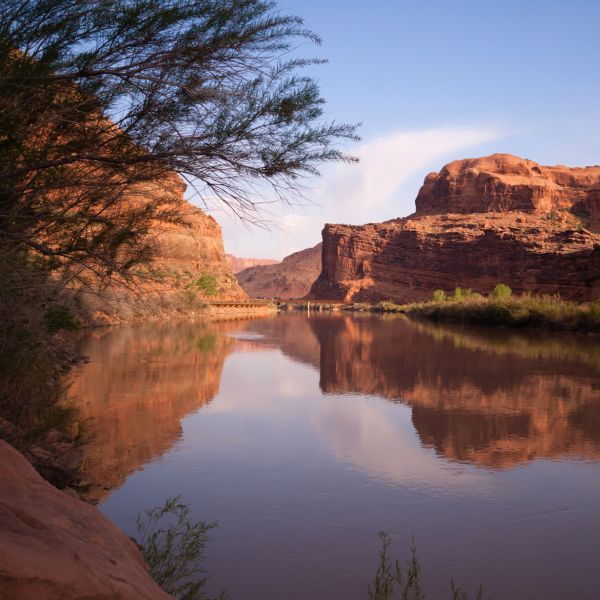
Colorado River
The Colorado River forms the southern boundary of the park. While the river itself is not within the park boundaries, it has played a crucial role in shaping the canyons and landscape through erosion over millions of years.
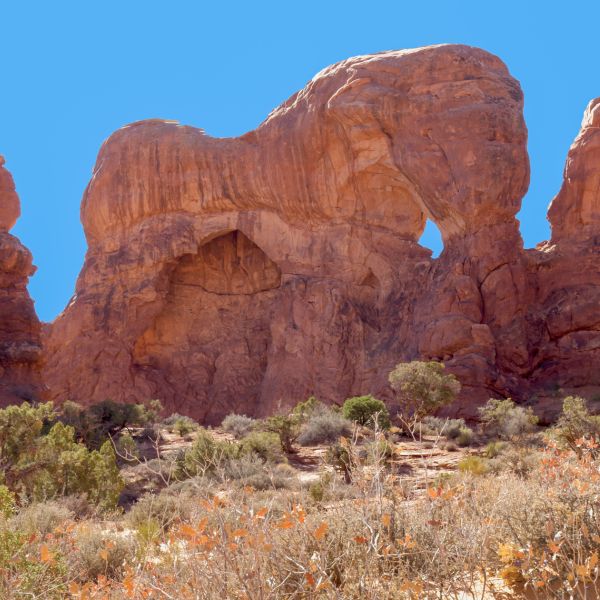
Elevation
The elevation of Arches National Park varies across the landscape, ranging from approximately 4,085 feet at the lowest point along the Colorado River to over 5,600 feet at the highest point on the Elephant Butte.
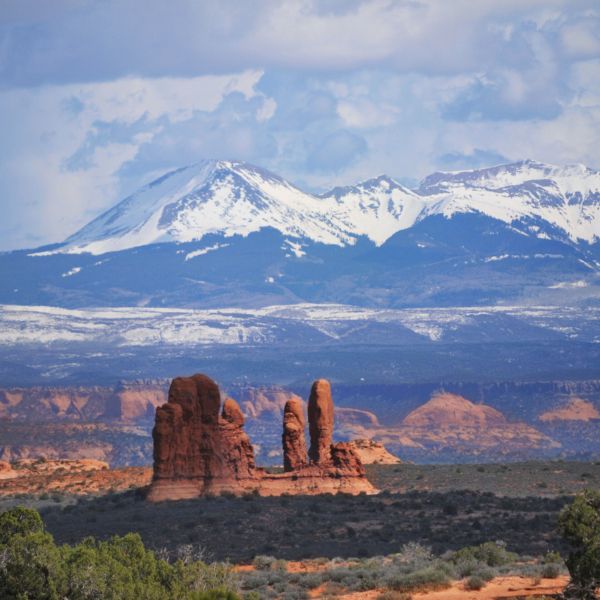
La Sal Mountains
The distant La Sal Mountains provide a contrasting backdrop to the red rock landscape of Arches National Park. Snow-capped peaks in the winter add to the visual diversity of the region.
Plants
Arches National Park in Utah is renowned for its stunning natural arches, but its plant life is equally captivating. Amidst the otherworldly landscape of sandstone formations, a resilient array of desert flora thrives. From the iconic desert wildflowers that bloom in vibrant hues during the spring to the hardy shrubs and cacti adapted to the arid environment, the park’s plant diversity adds an extra layer of beauty to its surreal scenery. Exploring the park offers visitors not only breathtaking vistas of geological wonders but also an opportunity to appreciate the tenacity and adaptation of its plant inhabitants.
Animals
Mammals
Arches National Park is home to a variety of mammal species adapted to the arid desert environment. While some mammals are more elusive and primarily active during the night, visitors to the park may encounter a range of species.
Mule Deer (Odocoileus hemionus): Mule deer are a common sight in the park, known for their large ears and distinctive, branching antlers. They can be found throughout the park, often foraging on vegetation in the early morning or evening.
Desert Cottontail (Sylvilagus audubonii): These small rabbits are adapted to the desert environment and are often seen hopping through the vegetation, especially during the early morning or late afternoon.
Coyote (Canis latrans): Coyotes are highly adaptable and can be found in a variety of habitats, including deserts. They are primarily nocturnal but may be spotted during the day, especially in the early morning or late evening.
Black-tailed Jackrabbit (Lepus californicus): With long ears and powerful hind legs, black-tailed jackrabbits are well-adapted to the desert. They are primarily nocturnal and may be seen at dawn or dusk.
Rock Squirrel (Otospermophilus variegatus): These large, diurnal ground squirrels are often seen near rock formations, scavenging for food. Visitors should be cautious not to feed wildlife, including rock squirrels, as it is both unsafe and against park regulations.
Striped Skunk (Mephitis mephitis): Skunks are nocturnal and are known for their distinctive black and white coloration. They may be encountered during the night as they forage for insects and small animals.
Bobcat (Lynx rufus): Bobcats are elusive and primarily nocturnal. They are skilled predators, preying on small mammals and birds. While rare to spot, they do inhabit the park’s rocky and brushy areas.
Mountain Lion (Puma concolor): Mountain lions, also known as cougars or pumas, are present in the region but are rarely seen due to their elusive nature. They are primarily nocturnal and solitary.
Bats: Various species of bats inhabit the park, utilizing the rock formations as roosting sites. They are important for insect control and are primarily active during the night.
Porcupine (Erethizon dorsatum): While less common, porcupines are present in the park and may be found in rocky or wooded areas.
Reptiles
Birds
Fish
Amphibians
“Mother Nature is a master sculptor and in no place is that more evident than at Arches National Park.”
―
“A landscape of contrasting colors, land forms, and textures unlike any other. The park has over 2,000 natural stone arches, hundreds of soaring pinnacles, massive rock fins, and giant balanced rocks. This red-rock wonderland will amaze you with its formations, refresh you with its trails, and inspire you with its sunsets.”
– National Park Services